 DuneTribe4x4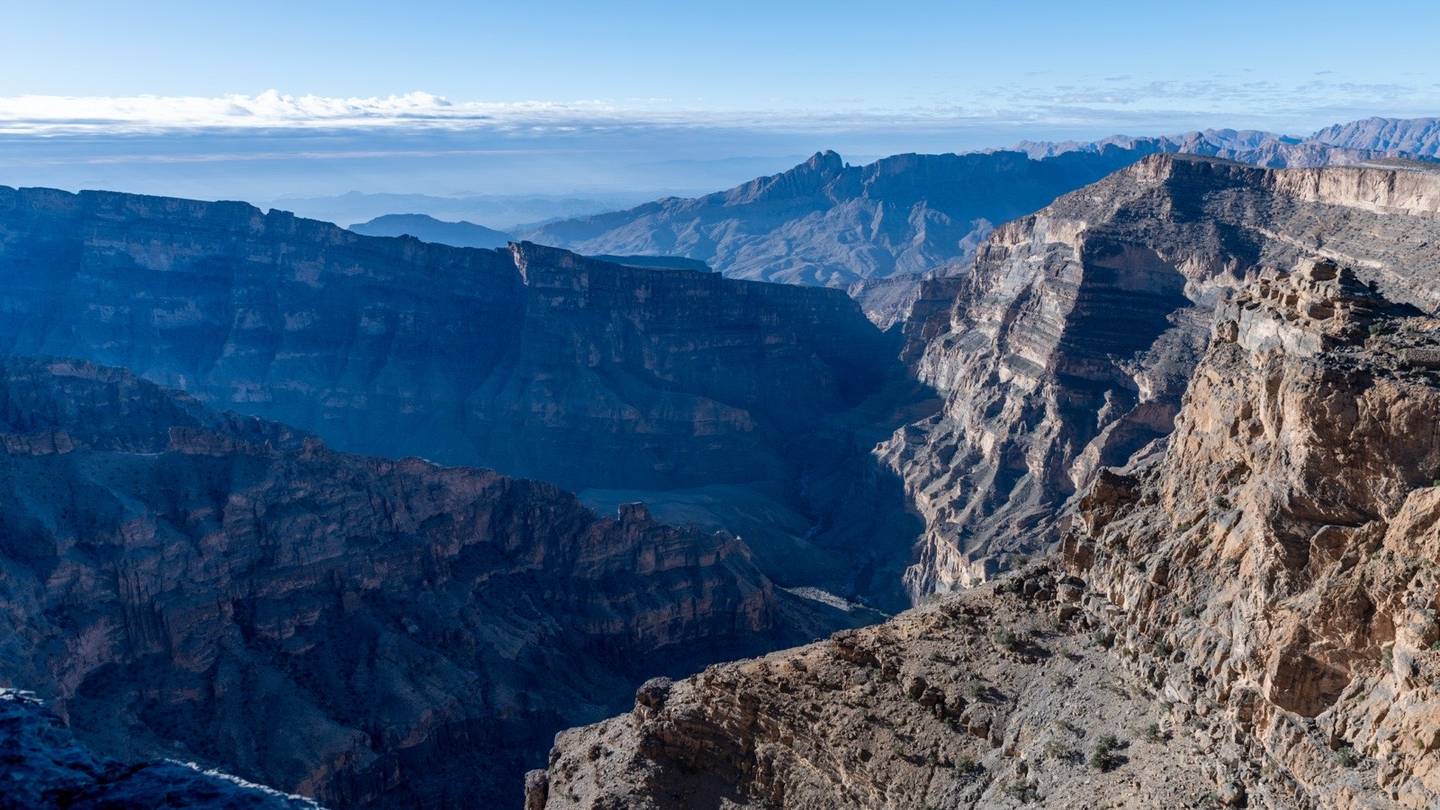
The mountain loop: Nizwa, Jebel Akhdar and Jebel Shams by 4x4
Nizwa · Jebel Shams · Jebel Akhdar
Photo: Christoph Strässler · CC BY-SA 2.0
This loop takes you into the Hajar Mountains, less than two hours' drive inland from Muscat. You sleep twice at about 1,900 to 2,000 m. The first night is on the Saiq plateau of Jebel Akhdar. The second is on the rim of the Wadi Ghul canyon, below Jebel Shams, the highest mountain in Oman. Between the two plateaus you visit Nizwa, old mud-brick villages with palm gardens, and three of the best-known forts in the country.
The driving suits a first 4x4 trip. Almost every road is tarmac, but the mountain roads are long and steep. A police checkpoint at the foot of Jebel Akhdar lets only 4x4 vehicles continue. Near the top of Jebel Shams there are gravel sections, and the road is being upgraded in 2026 and 2027, so expect roadworks. There is no sand driving on this route.
Our minimum rental is 3 days, and the full loop takes 3 days. For a shorter version, skip Day 1: drive from Muscat straight to Nizwa and Jebel Shams, and keep the third day for Muscat. You can also add Wahiba Sands or the coast for a longer trip.
Day by day
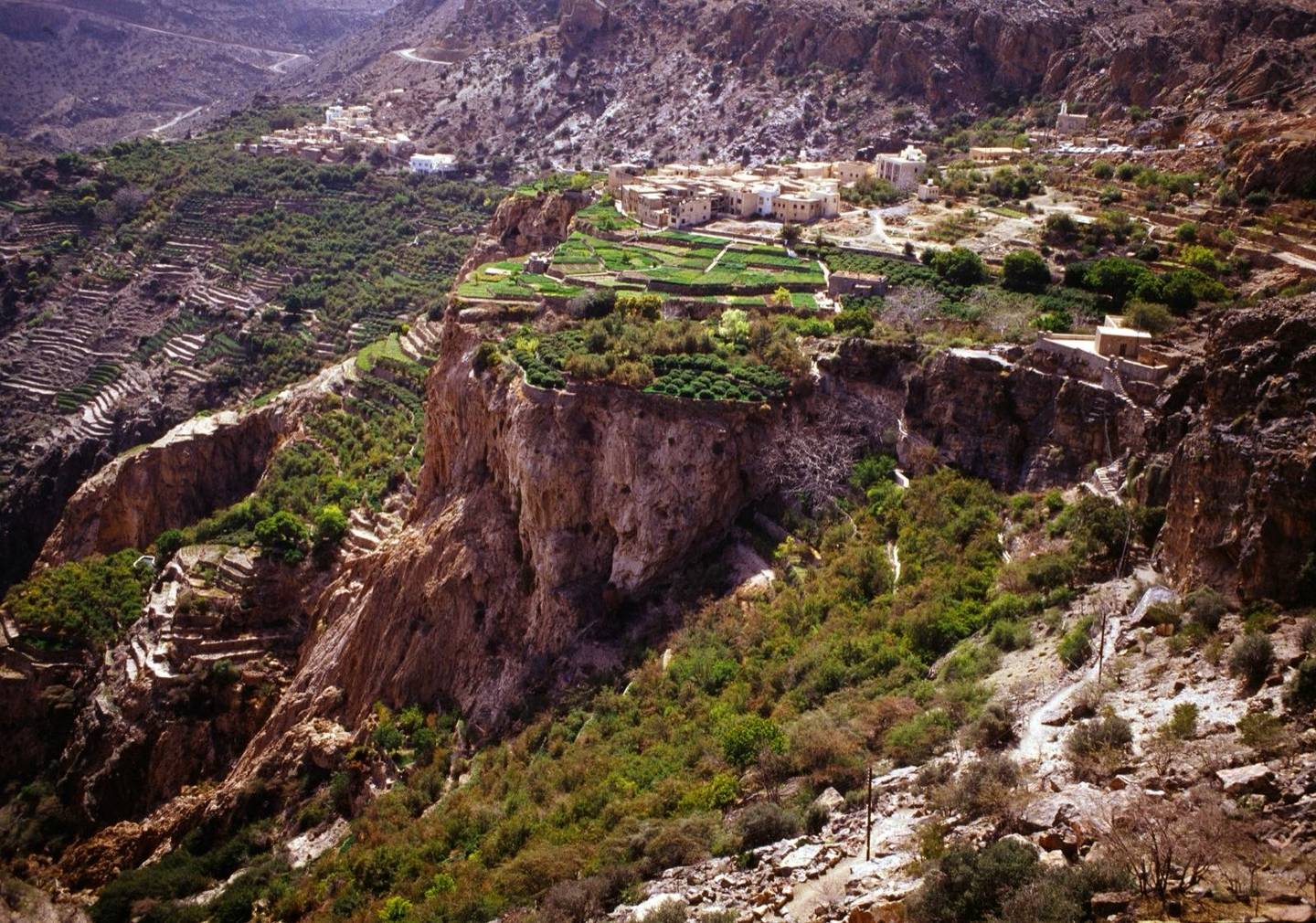
Photo: Ketan Mehta · CC BY-SA 3.0
Day 1 (optional) · Muscat to Birkat al Mawz and Jebel Akhdar
Collect the car and take the N2 dual carriageway inland towards Nizwa. About 130 km from the airport, leave it for the S30 and Birkat al Mawz, an oasis town at the foot of Jebel Akhdar. About 7 km up the D518 is the police checkpoint. Only 4x4 vehicles may continue, so have your passports, driving licences and the car registration card (mulkiya) ready. From the checkpoint, the road gains about 1,200 m in some 30 km to the Saiq plateau, at around 1,900 to 2,000 m. Spend the afternoon on foot: the abandoned village in Wadi Bani Habib, the terraced villages on the rim, and the sunset over the terraces.
- Birkat al Mawz — Walk through the palm gardens and the ruined old quarter below the mountain. Falaj Al Khatmeen, one of the five aflaj (water channels) on the UNESCO World Heritage list, runs through the courtyard of Bayt Ar-Ridaydah, a 17th-century fortified house that is open to visitors. Buy fuel, food and water here before the climb.
- Wadi Bani Habib — The D518 ends here. From the car park, stone steps lead down into a green valley with walnut and other fruit trees and the ruins of an abandoned village of mud and stone houses. Allow 1 to 1.5 hours there and back.
- Al Aqur, Al Ayn and Ash Shirayjah (path W18b) — A signposted path links three villages on the edge of the gorge, about 4 km one way, with many steps and some rocky parts. The terraces grow pomegranates, walnuts and the damask roses used for rosewater, picked from about mid-March to early May. Walk the first section and return, or allow 3 to 4 hours for the full path there and back.
- Sunset over the terraces — Diana's Point is inside the grounds of the Anantara resort, but there is a free viewpoint with a similar view over the terraces next to the Layali Al Jabal restaurant nearby.
Where to sleep: Open public ground on the plateau, well away from houses, farms, terraces and hotels. Several popular spots with views into the gorges are on the rocky western part of the plateau, towards the Alila hotel. Park on a flat gravel spot and do not drive over plants. Jebel Akhdar became a UNESCO biosphere reserve in 2025, and part of the mountain is the Al Jabal Al Akhdar Scenic Reserve, where camping or staying overnight needs a permit from the Environment Authority. Respect any signs and fences, and if you are not sure, ask at your hotel or at the checkpoint. Take all rubbish with you and cook only on the stove. From December to February the nights are cold, sometimes close to freezing.Tip: Fill the tank in Birkat al Mawz. There is only one fuel station on the plateau (Al Maha, in Saiq), and the climb uses more fuel than usual.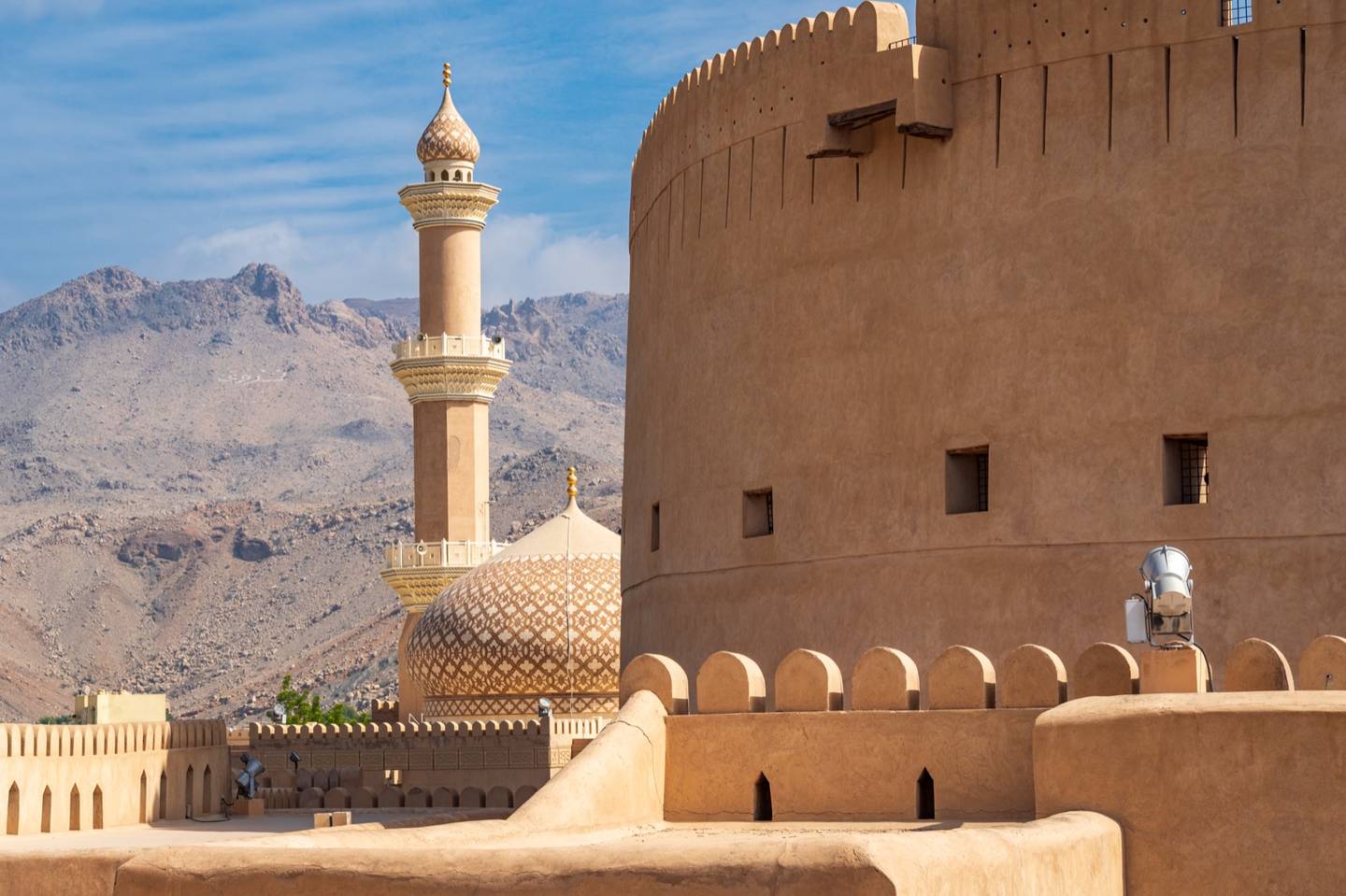
Day 2 · Jebel Akhdar to Nizwa, Al Hamra, Misfat and Jebel Shams
Leave the plateau after breakfast and drive down in a low gear. Spend the morning in Nizwa. On a Friday, leave the plateau by about 6:30 to see the goat market. Then drive north-west to Al Hamra and Misfat al Abriyeen, two old villages above palm gardens. Fill the tank at the Shell station in Al Hamra: there is no fuel station on Jebel Shams. The mountain road climbs past Ghul in steep bends. Near the top, parts of the road are graded gravel, and a two-year upgrade of the road started in January 2026, so expect roadworks, diversions and changing surfaces. Arrive before sunset, which from November to January is between about 17:25 and 17:55. If you skip Day 1, start here from Muscat: about 160 km and 2 hours to Nizwa on the N2.
- Nizwa Fort, souq and Friday goat market — Climb the round tower of the 17th-century fort, 34 m high, for a view over the palm oasis. The fort opens daily at 8:00, with a midday break on Fridays from about 11:30 to 13:30. Closing time is given as 18:00 or 20:00 depending on the source, so check before you go. Entry is about 5 OMR per adult (2025-2026). On Fridays from about 6:30 to 9:30, farmers trade goats and cattle in the auction ring at the souq. Arrive by 7:00 and dress modestly.
- Al Hamra — The old quarter is one of the best-preserved mud-brick quarters in Oman, with rows of houses several storeys high. In Bait al Safah, a restored family house run as a small museum, local women show how Omani bread, coffee and other traditional products are made.
- Misfat al Abriyeen — Park at the village entrance, or in the car park further back when it is full, and walk down the lanes beside the falaj to the gardens. Allow 1 to 2 hours. Cover shoulders and knees, do not pick fruit, do not swim in the falaj pools, and stay out of private houses and the mosque.
- Wadi Ghul viewpoints — Stop near Ghul to see the ruined old village on its rocky hill at the mouth of the canyon. Higher up, several parking areas look down into the gorge, which is about 1,000 m deep.
Where to sleep: On the canyon rim between the Jebel Shams Resort and Al Khitaym, where the road ends, or on the open plateau before the resorts. Park on a flat spot well back from the edge and away from village houses. There is no water and no free toilet; the resorts and the walking trail have small paid toilets. Keep food and rubbish inside the car, because goats roam the rim and eat whatever is left out. Building work for a new visitor area is under way on the mountain, so some spots may be fenced off. The rim is windy, and from December to February the nights can drop to around or below 0 °C.Tip: On the long descent from Jebel Akhdar, use a low gear (L or manual mode in an automatic) and let the engine hold the car. Do not keep your foot on the brake: brakes overheat on long steep roads. The road has escape lanes for vehicles whose brakes fail.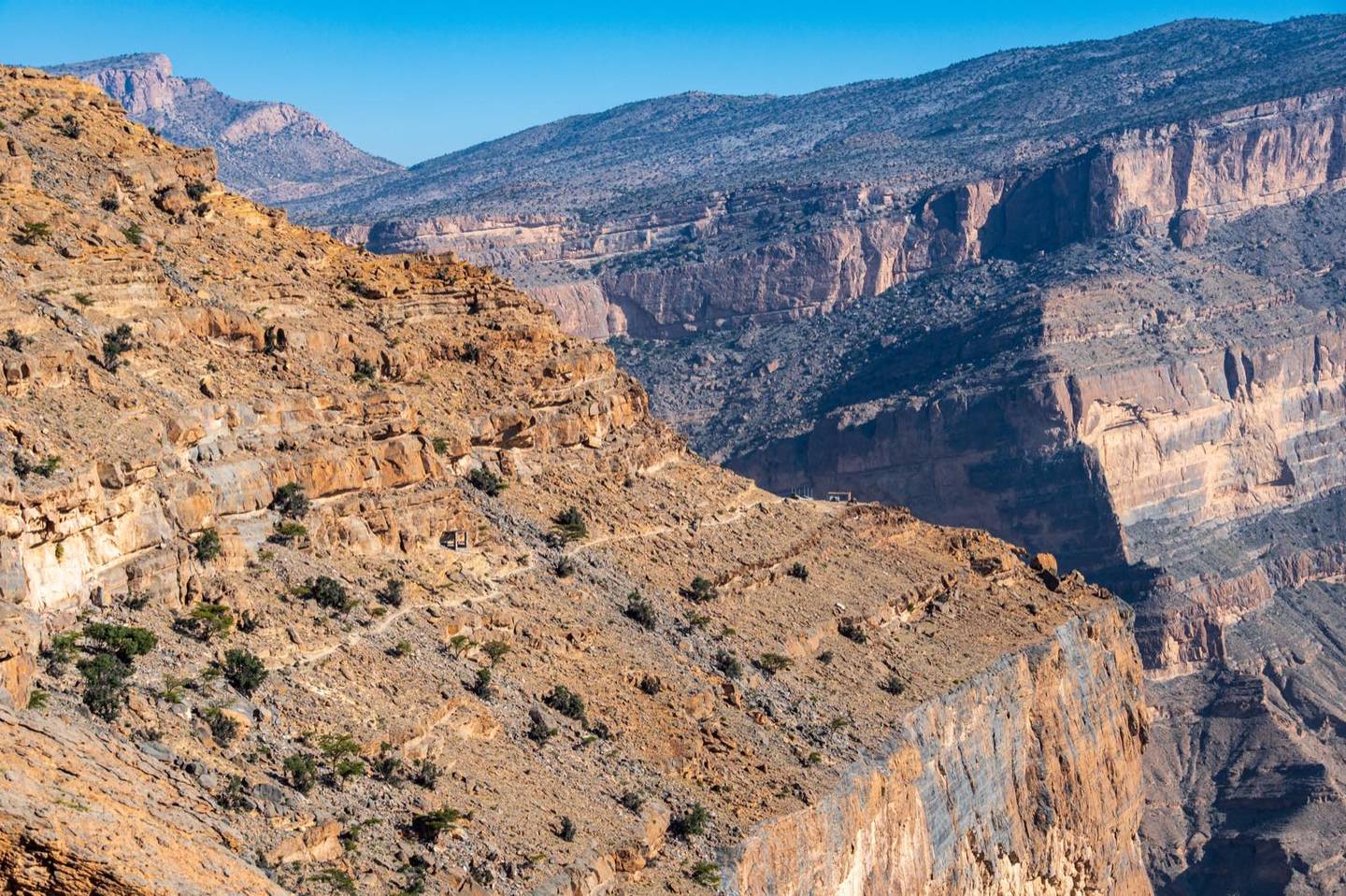
Day 3 · Balcony Walk, Bahla and Jabrin, back to Muscat
Watch the early light on the canyon walls, then start the Balcony Walk early, while it is still cool. After the walk, drive down to Al Hamra and on to Bahla. Visit Bahla Fort and then Jabrin Castle, about 10 km away. From Jabrin it is about 185 km, or 2 to 2.5 hours, back to Muscat on the N2. Return the car at the airport or at your hotel.
- Balcony Walk (W6) — The signposted path starts at Al Khitaym and follows a ledge along the canyon wall to the abandoned village of As Sab. It is about 8 km there and back. You lose a few hundred metres of height on the way out (sources give 200 to 350 m) and climb it again on the way back. Allow 3 to 5 hours. Most of the path has no railings, so it is not for people with vertigo. The small toilets at the start and along the path cost a few hundred baisa (about 0.3 to 0.5 OMR), so carry coins.
- Bahla Fort — The first site in Oman on the UNESCO World Heritage list (1987): a large mud-brick fort above a palm oasis, inside an old town wall more than 12 km long. The official site gives 8:00 to 19:00 daily, but visitors in 2025 reported closing at 16:00 and Friday mornings only, so arrive early. Entry is about 5 OMR per adult; check before you go. Bahla is also known for its potters.
- Jabrin Castle — A palace completed in 1675 for Imam Bil'arab bin Sultan, with painted wooden ceilings, carved doors and the Sun and Moon room. Open daily 7:30 to 21:00; entry about 3 OMR per foreign adult, check before you go.
Where to sleep: No camp tonight. Return the car at the airport or at your Muscat hotel. If your rental continues with days in Muscat, book a hotel. In Muscat Governorate, camping is allowed only at sites set by the municipality, away from beaches and homes, and stays over 48 hours need a municipal permit.Tip: Leave the trailhead by about 11:00. From November to January the sun sets between about 17:25 and 17:55, so keep the fort visits short if you want to drive the N2 in daylight. After dark, watch for camels and goats near villages.
Which car?
Both cars are 4x4, so both pass the Jebel Akhdar checkpoint and handle the gravel to the Jebel Shams rim. A couple will be happy in the Jeep Wrangler; for three or four people with the extra ground tent, or for more comfort on the long N2 highway, choose the Land Cruiser Prado.
Practical tips
- Downhill, always use a low gear. In an automatic car, select L or manual mode. Brake in short, firm pushes, not all the time. The Jebel Akhdar road has escape lanes for a reason.
- Tyres: keep normal road pressure on this loop. The graded gravel near Jebel Shams does not need lower pressure. Check the pressure on cold mornings with the compressor in the kit.
- There is no sand on this route. If you add Wahiba Sands, drive only on the marked tracks to your desert camp. Free dune driving is not allowed with our cars.
- Cold and heat: at about 2,000 m, nights from December to February are windy and can be close to 0 °C. Bring a warm jacket, a hat and warm socks. From May to September the plains around Nizwa are often above 40 °C, so visit the forts early.
- Fuel: fill up in Birkat al Mawz before Jebel Akhdar and at the Shell station in Al Hamra before Jebel Shams. There is one fuel station on the Saiq plateau and none on Jebel Shams (one is planned but not built yet).
- Tickets: Nizwa Fort and Bahla Fort cost about 5 OMR per adult and Jabrin Castle about 3 OMR (2025-2026 reports). Opening hours differ between sources and change on Fridays, during Ramadan and on public holidays. Check before you go.
- Dress code: cover shoulders and knees in villages, forts and souqs. Ask before you take photos of people. During Ramadan (expected around 8 February to 9 March 2027; the exact dates depend on the moon), eating, drinking or smoking in public during the day is against the law for everyone, including non-Muslims.
- Water: carry at least 5 litres per person per day, and 2 litres each for the Balcony Walk. There is no drinking water at the camp spots on either plateau.
- Offline maps: download the area in Google Maps or Maps.me before you leave Muscat. The phone signal is weak in the canyons and on parts of Jebel Shams.
- Rain and wadis: never camp in a wadi bed, because a storm far away can send a flood down a dry valley. After rain the gravel sections of the Jebel Shams road can be slippery. Take all rubbish with you, make no fires on vegetation, and cook on the gas stove. Do not collect wood or cut plants: collecting firewood needs a permit in Oman, and in the Jebel Akhdar reserve fires and cutting plants are forbidden.
Questions
Do I need a 4x4 for Jebel Akhdar?
Yes. A police checkpoint about 7 km up the road from Birkat al Mawz lets only 4x4 vehicles continue, and the rule is enforced. Have passports, driving licences and the car registration card ready. Both DuneTribe4x4 cars, the Jeep Wrangler and the Toyota Land Cruiser Prado, are 4x4.
Do I need a 4x4 for Jebel Shams?
There is no checkpoint, and in dry weather some people drive up in ordinary cars. But the road is steep, parts near the top are gravel, and a two-year upgrade that started in January 2026 means roadworks and changing surfaces. After rain it can be rough or slippery. A 4x4 with high ground clearance is the safer choice, and it also reaches more camp spots on the rim, where the tracks past the resorts get rougher.
Can you camp on Jebel Shams and Jebel Akhdar?
Yes. Wild camping on public land is common in Oman and outside Muscat Governorate it normally needs no permit. The exception on this route is the Al Jabal Al Akhdar Scenic Reserve, a protected area on Jebel Akhdar where camping or staying overnight needs a permit from the Environment Authority, so respect signs and fences there. Everywhere, camp away from villages, farms and private land, take all rubbish with you, and make no fires on vegetation. Both camps are at about 1,900 to 2,000 m, so winter nights are cold.
What is the best time to visit Jebel Shams and Jebel Akhdar?
October to April is best for the whole loop, because the forts and towns in the plains are pleasant then. December to February brings the coldest nights, around freezing on the Jebel Shams rim. The rose harvest on Jebel Akhdar runs from about mid-March to early May. In summer the plateaus are 10 to 15 °C cooler than the plains, but Nizwa and Bahla are very hot.
How long is the Balcony Walk (W6) on Jebel Shams?
About 8 km there and back, from Al Khitaym to the abandoned village of As Sab, with a few hundred metres of descent on the way out and the same climb back. Most people need 3 to 5 hours. The path is signposted, but it runs along steep drops with almost no railings. Start early and carry at least 2 litres of water per person.
Can you camp in Wahiba Sands?
Yes, at the desert camps. With a DuneTribe4x4 car, you drive on the marked tracks to your camp only; free driving on the dunes is not allowed. From Nizwa it is about 175 km, or about 2.5 hours, to the edge of the sands near Al Wasil, so you can add one or two days after this loop. Book the camp in advance and ask if you can sleep in your roof-top tent there.
Ready to go?
Choose your dates. We hand over the car with the roof-top tent and the full camping kit at Muscat airport or at your hotel in Muscat.
More itineraries
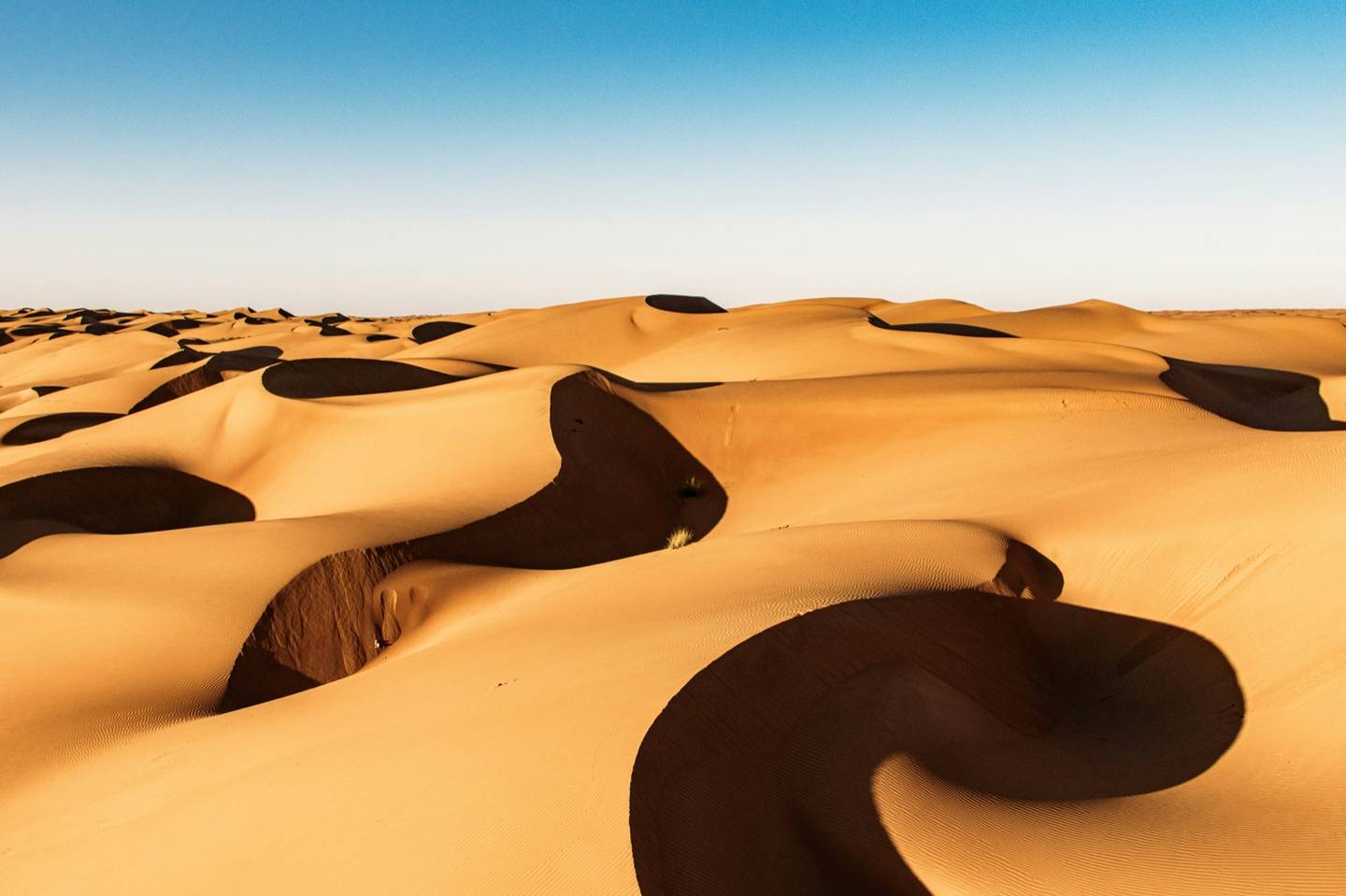 Dunes and wadis
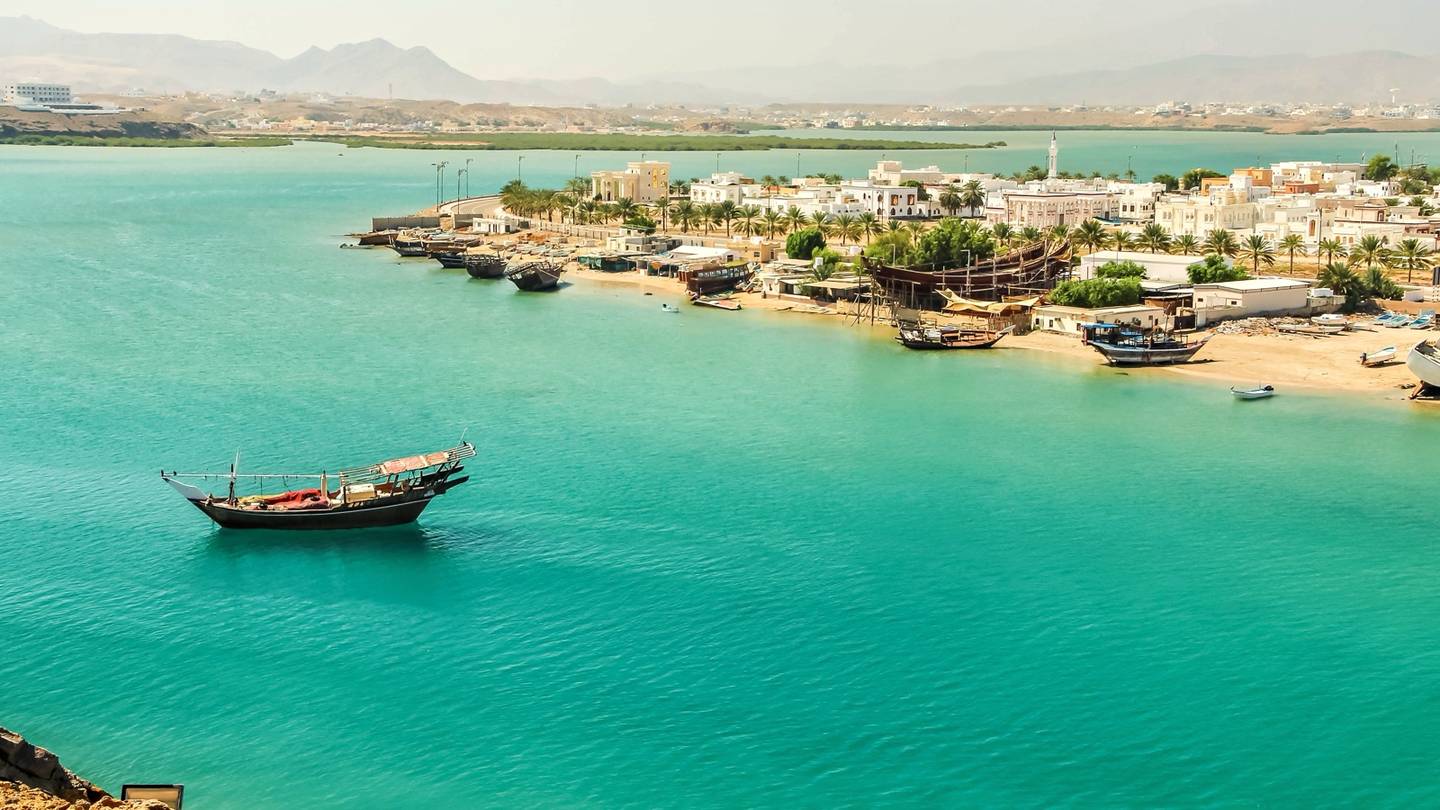 The south coast
Distances and driving times are approximate. Check road conditions, tides, weather and opening times before you go. Photos are licensed stock photos of the places, not of our cars.