 DuneTribe4x4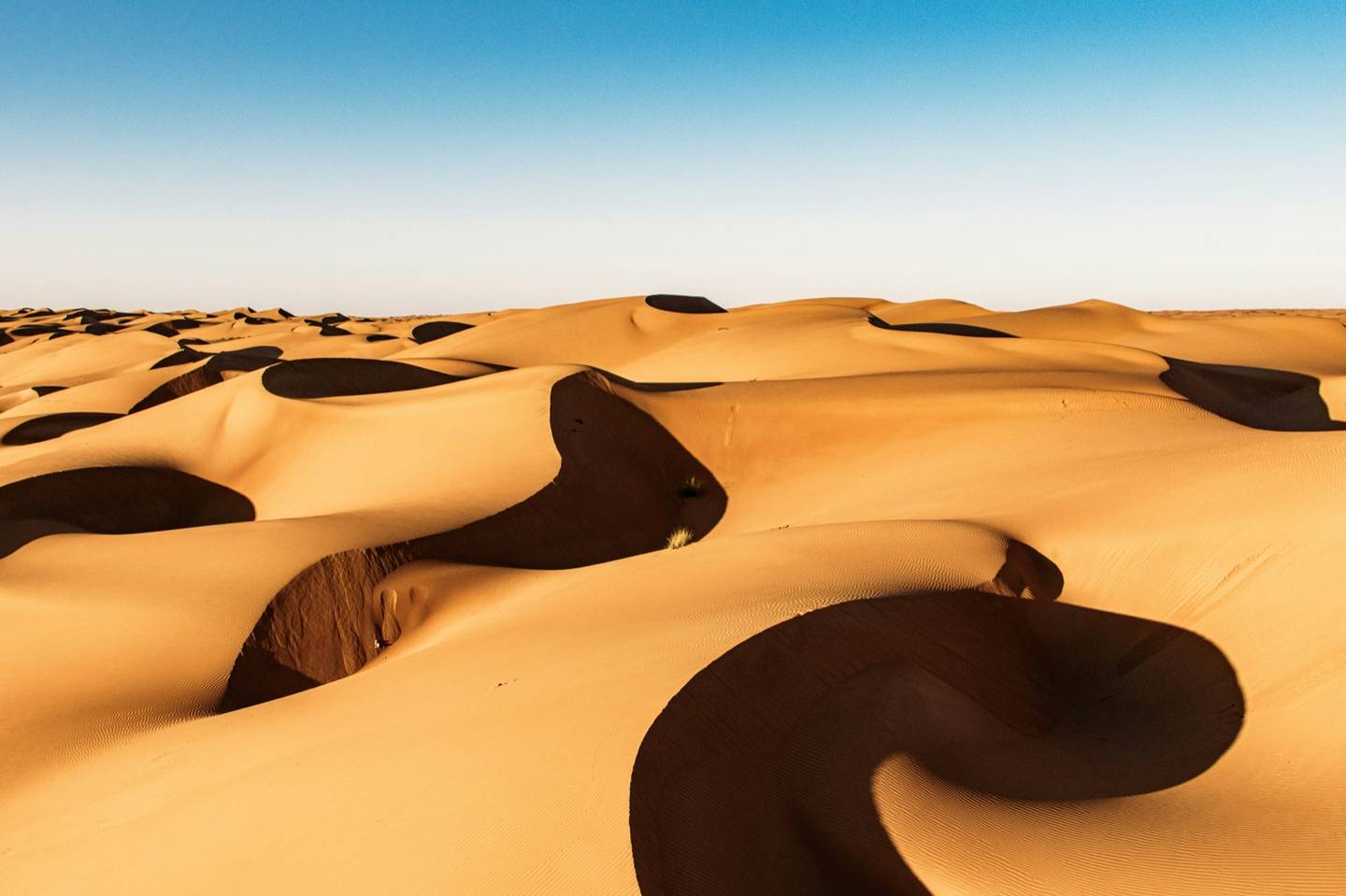
Dunes and wadis: a 4-day 4x4 loop from Muscat to the Wahiba Sands
Wahiba Sands · Wadi Bani Khalid · Sur
Photo: Rafael Peier · Unsplash License
This round trip from Muscat covers three landscapes: the coast, two of Oman's best-known wadis and the Wahiba Sands, which are now officially named the Sharqiya Sands. You swim in Bimmah Sinkhole and Wadi Shab, see wooden dhows being built in Sur and walk to the green pools of Wadi Bani Khalid. Then you sleep at the edge of the dunes. On the way back you stop in the old mud-brick towns of Al Mudayrib and Ibra.
Almost the whole route is on paved roads. The only sand driving is a marked track of 5–15 km to your desert camp, so the trip suits first-time 4x4 drivers. Three days cover the main sights. The optional fourth day gives you a second night in the desert and time for anything you missed.
You sleep in the roof-top tent every night: first on the coast at Fins, then in the Wahiba Sands. In the desert, drive only on marked tracks to the camps and never onto the dunes. Camp away from villages, farms and private land, take all your rubbish with you, and never light a fire on or near plants.
Day by day
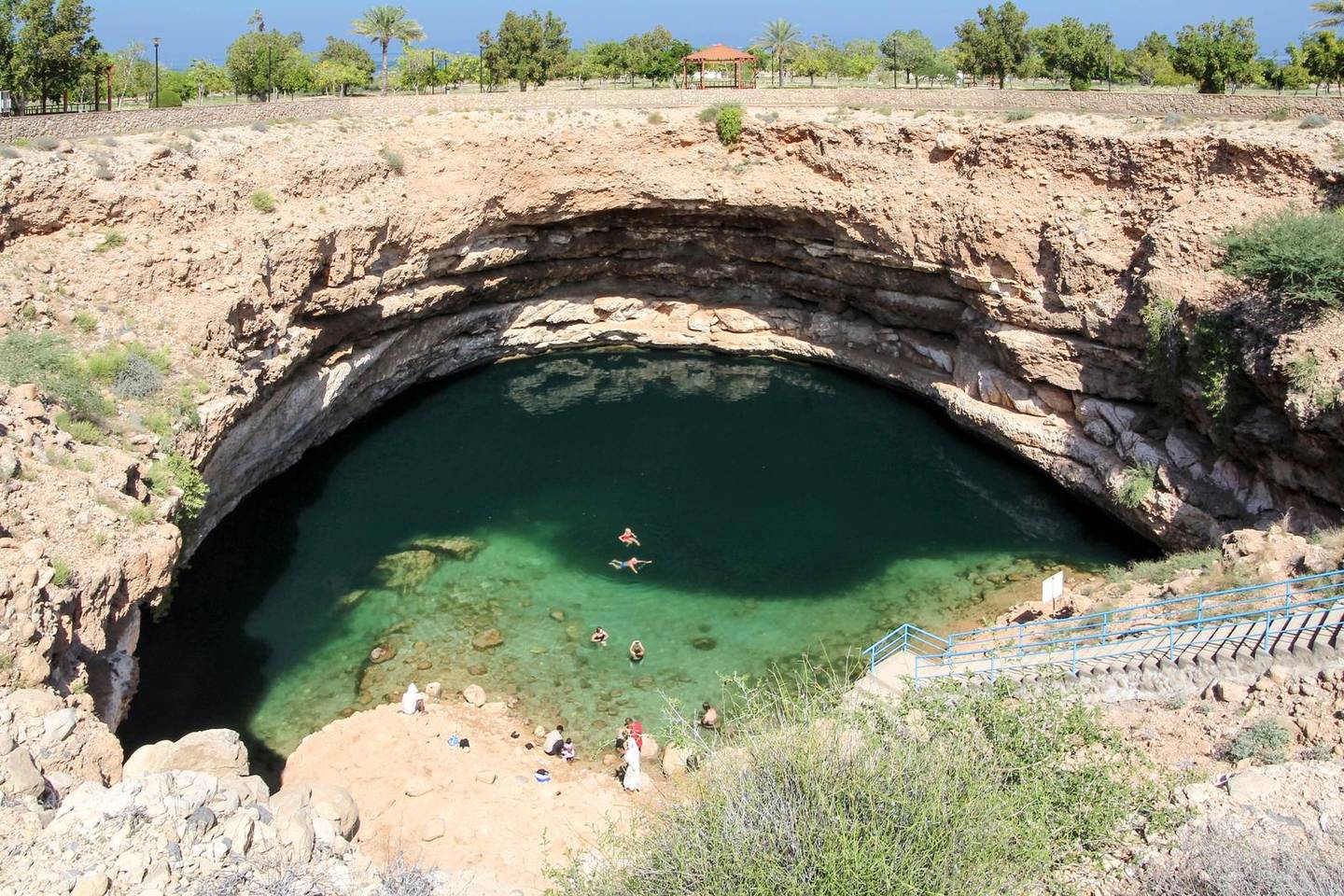
Photo: Dr. Thomas Liptak · CC BY-SA 4.0
Day 1 · Muscat to Bimmah Sinkhole, Wadi Shab and Fins
Collect your 4x4 in the morning and go through the camping kit with our team. Stock up on food and water in Muscat, because large supermarkets are rare on the coast road. Then drive south-east on the A2, between the mountains and the sea. Swim in Bimmah Sinkhole, then walk and swim in Wadi Shab in the afternoon. Drive about 15 km back north to Fins for your first night by the sea.
- Bimmah Sinkhole (Hawiyat Najm Park) — A collapsed limestone hollow with a pool of clear blue-green water, between the villages of Dibab and Bimmah. Concrete steps lead down to the water and you can swim at your own risk; there is no lifeguard. The park has toilets, shade and picnic tables. In 2026 some visitors paid about 500 baisa entry and others paid nothing, so carry small cash and check before you go.
- Wadi Shab — Park under the highway bridge near Tiwi. A small boat takes you across the first pool: 1 OMR per person return in 2026, cash only, usually from about 8:00 to 17:00. The walk up the gorge to the deep pools takes 45–60 minutes each way. Strong swimmers can swim through a narrow gap into a cave with a waterfall. Wear water shoes and keep your phone in a dry bag. Start the walk by 14:00 at the latest.
- Fins beach — Small pebble and sand beaches with clear turquoise water between low cliffs. Bring what you need, as there are no shops on the beach. A good place for a last swim before sunset.
Where to sleep: Sleep on flat ground above the beach or on the low cliffs at Fins. Fins is in the wilayat of Quriyat, in Muscat Governorate, so Muscat Municipality's camping rules apply. You need a permit only if you stay more than 48 hours. Camp at least 10 m back from the beach, at least 100 m from homes and away from fishermen's areas, and stay above the high-tide line. Fires and barbecues on the beach are not allowed. The municipality can limit camping to the places it allows, so follow local signs and check its website before you go. Another option is the camping-vehicle parking at Fins Beach Park, opened by Muscat Municipality in August 2024 with power and sewage connections; check fees and rules first.Tip: If your flight lands after midday, change the order. Visit Bimmah today and sleep at Fins. Walk Wadi Shab at 8:00 the next morning, when it is quiet, then drive through Sur straight to the Wahiba Sands. Visit Wadi Bani Khalid on Day 3 instead.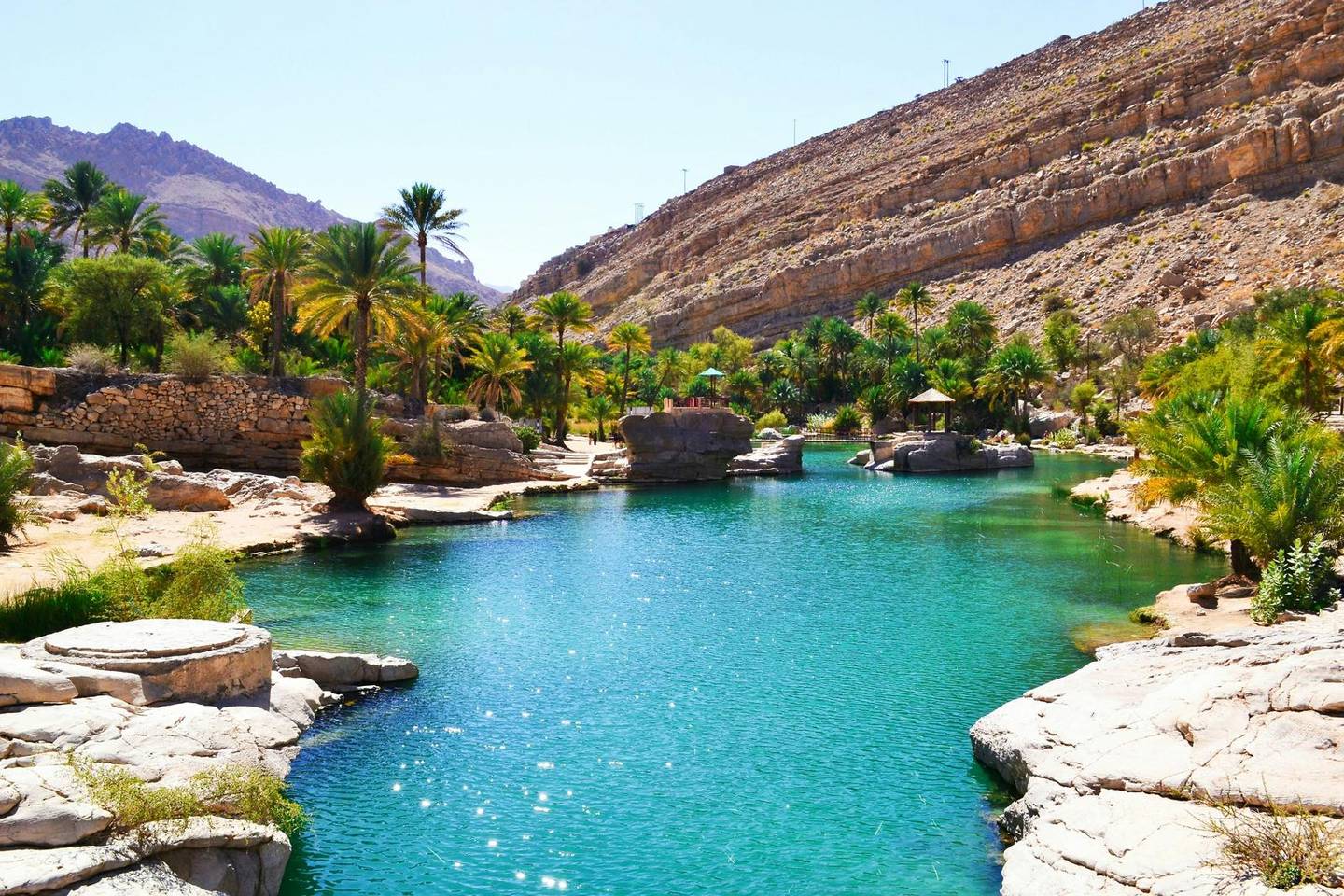
Photo: Dev Mallangada · Unsplash License
Day 2 · Fins to Sur, Wadi Bani Khalid and the Wahiba Sands
This is the longest day, so leave Fins by 7:30. Follow the A2 to Sur, an old trading port where wooden dhows are still built by hand. From Sur, the N4 heads inland across wide gravel plains. A side road climbs into the hills to Wadi Bani Khalid, where green pools lie between palm trees and large boulders. In the afternoon, return to the N4 and drive west to Al Wasil. Lower your tyre pressure there and follow the marked track into the orange dunes of the Wahiba Sands.
- Qalhat and the Bibi Maryam Mausoleum — A short exit from the A2. This domed tomb from the early 14th century is the only building still standing in the old port city of Qalhat, a UNESCO World Heritage Site since 2018. Allow 20–30 minutes.
- Sur — Watch the boatbuilders at the open-air dhow yard by the lagoon, next to the bridge to Al Ayjah; a small fee may be charged. Cross the bridge to Al Ayjah to see the old lighthouse from outside and walk the lanes of old houses. Fill the tank and buy fresh food here.
- Wadi Bani Khalid — Entry is free, and most 2025–2026 reports say parking is free too. The car park toilets cost about 400 baisa and the changing tents about 100 baisa, in cash. The first pools are less than 5 minutes' walk from the car park, and Muqal Cave is about 1 km further up the wadi. Bring a head torch for the cave. Signs ask swimmers to cover upper arms and knees.
- Al Wasil — Fill the tank at Al Wasil, the last fuel before the sand. Lower the tyres to about 18–20 psi (1.2–1.4 bar) with the gauge in your kit before you leave the tarmac. Small tyre shops in the area can also help.
Where to sleep: Option 1: a desert camp on a marked track from Al Wasil or Al Mintirib. Prices vary a lot. In 2025–2026 listings, simple camps started at roughly OMR 15–25 per person with dinner and breakfast, and luxury camps cost OMR 100 or more per tent per night. Prices change with the season, so check before you go. You can also ask a camp if you may sleep in your own roof-top tent and pay for dinner and showers. Option 2: the edge of the dunes. Stop on firm, flat ground right next to the marked track, out of sight of houses, farms, camel pens and other camps. Do not leave the track to reach a spot, do not drive onto the dunes, and do not drive on sand after dark.Tip: Plan to reach Al Wasil by 15:30. From mid-November to January the sun sets between about 17:20 and 17:50, and the sand track is much easier in daylight. If you are late, skip the walk to Muqal Cave.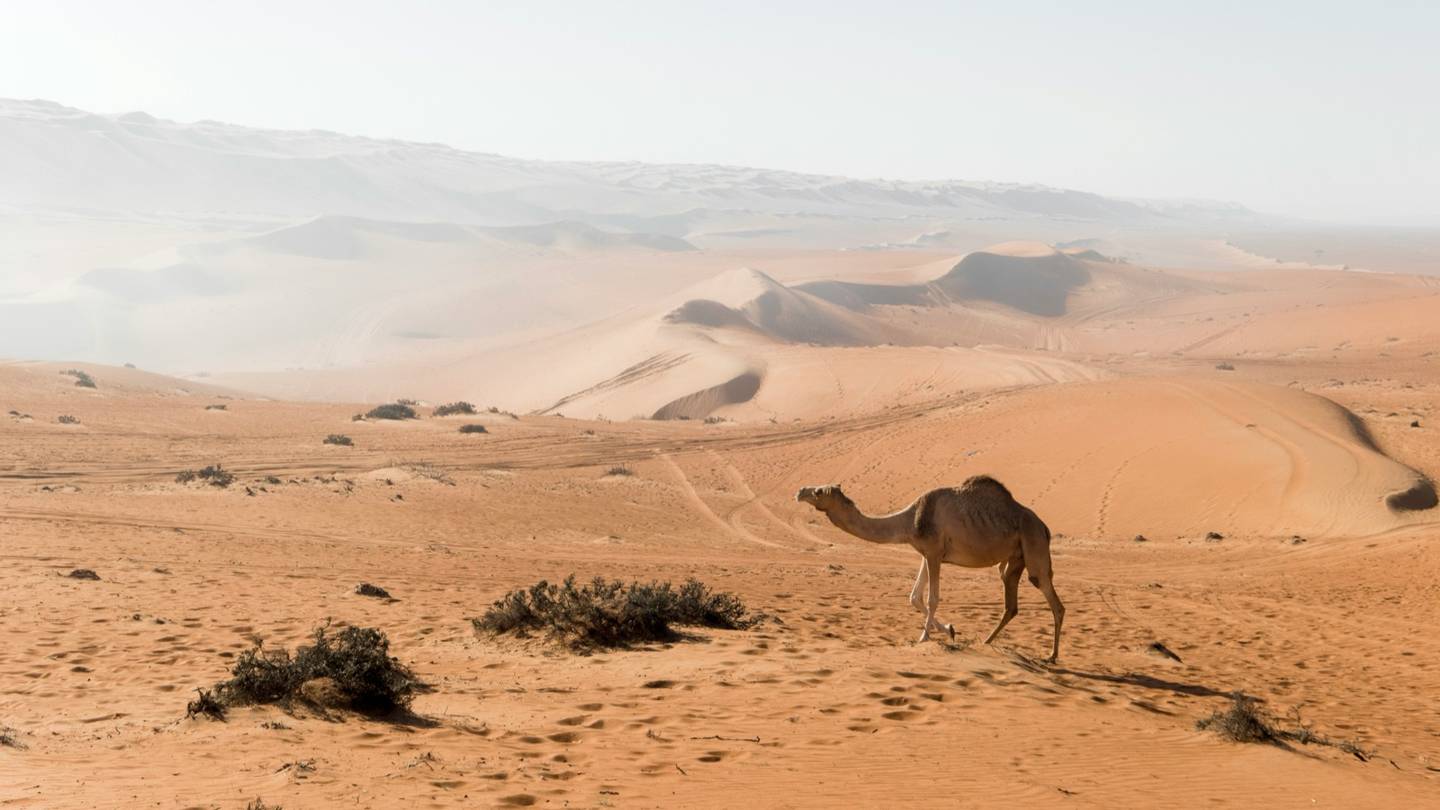
Photo: Arisa S. · Unsplash License
Day 3 (optional) · A slow day in the Wahiba Sands
Stay a second night in the desert. Walk up a dune for the sunrise and have a slow breakfast. In the cooler morning, drive to the old town of Al Mintirib on the northern edge of the sands. Back at camp, rest in the shade during the hot hours. Your camp can arrange a camel ride or a visit to a Bedouin family. Return to the dunes on foot for the sunset and a dark, clear night sky. If you missed Wadi Bani Khalid yesterday, go there in the morning instead; it is about one hour from Al Wasil.
- Sunrise dune walk — Start walking up the nearest high dune about 30 minutes before sunrise, which is between about 6:10 and 6:45 from November to January. Walk, do not drive: our rental rules do not allow driving on the dunes.
- Camel ride or Bedouin visit — Ask your camp. Prices vary a lot between camps, so agree the price before you start.
- Al Mintirib — An old town about 9 km from Al Wasil, with a large mud-brick fort, palm gardens and old houses. The fort has been reported open only in the morning, Sunday to Thursday (about 7:30–14:30), so go early and check locally.
- Guided dune trip — If you want to see the high dunes up close, book a trip with a licensed local driver in their own vehicle. Your rental car stays at camp.
Where to sleep: Stay at the same camp or the same spot at the edge of the dunes. If you move to another camp, use its marked track and arrive before dark.Tip: The sand is very hot at midday and the light is flat. Plan walks for the first and last two hours of daylight, and drink often even when it feels cool. Desert nights from December to February are cool, often around 10–15 °C and sometimes colder, so keep warm layers ready.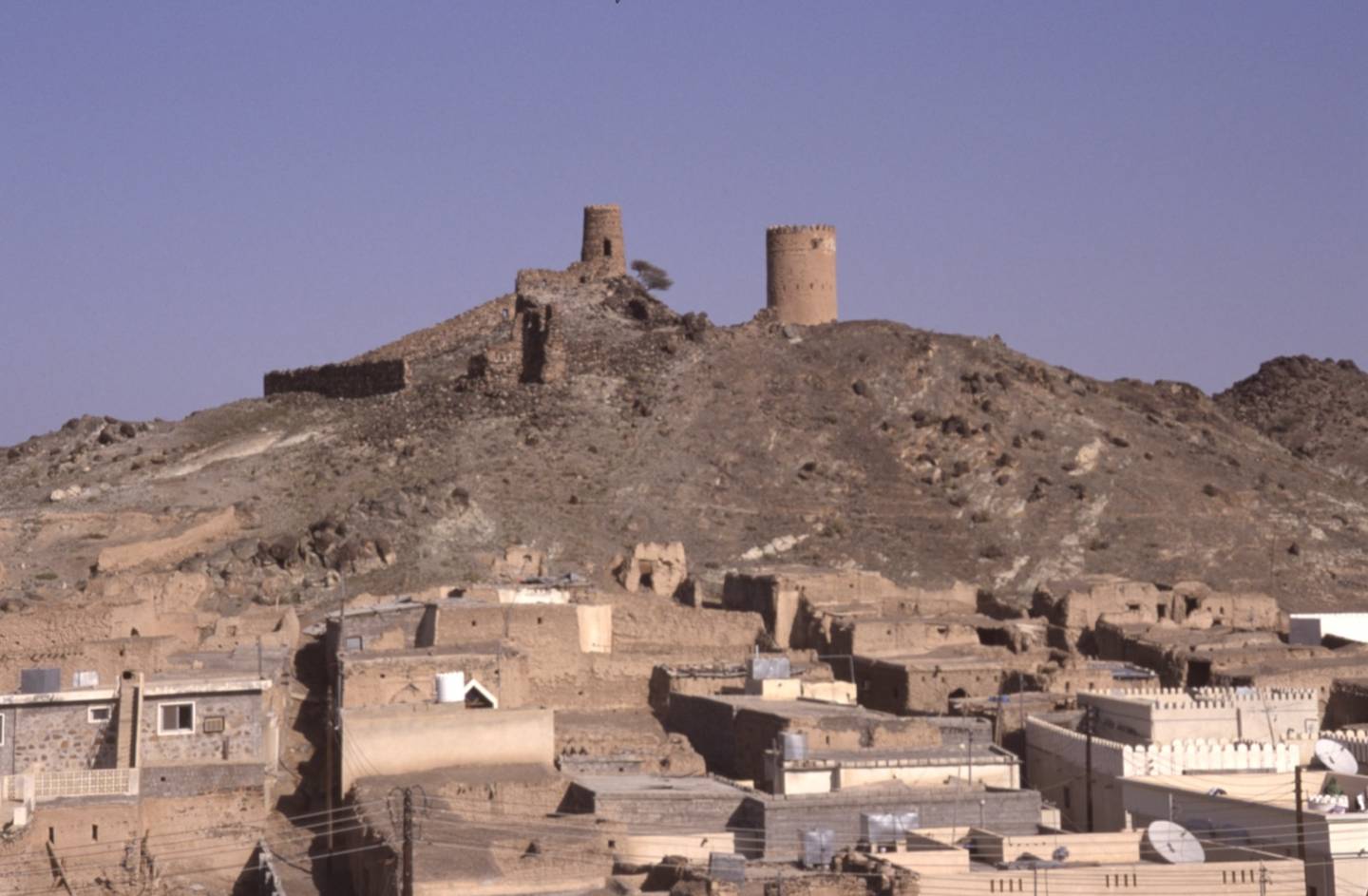
Photo: Bernhard Dunst · CC BY-SA 4.0
Day 4 · Wahiba Sands to Al Mudayrib, Ibra and Muscat
Drive out on the same track in the cool morning. Pump the tyres back to road pressure in Al Wasil before the highway. On the way north, stop at the old towns of Al Mudayrib and Ibra, with their mud-brick houses, watchtowers and palm gardens. The N4 then crosses the mountains and joins the N2 at Bidbid. Return the car at the airport or at your hotel in Muscat.
- Al Wasil — Use the compressor in your kit to pump the tyres back to the pressure on the driver's door sticker. Do not drive fast on tarmac with soft tyres.
- Al Mudayrib — A short detour from the N4, about 20 km from Al Wasil towards Ibra. Walk the lanes of the old town to the fort, the hilltop watchtowers and the remains of the old souq.
- Ibra — Walk through the old quarter with its large mud-brick houses, many now in ruins. On Wednesday mornings, from about 6:00 until late morning, the women's souq sells fabrics, clothes, crafts and food. It is for women only, so men cannot go in. Dress modestly and ask before you take photos of people.
Where to sleep: No camp tonight: you return the car in Muscat. If your flight is the next day, book a hotel in the city.Tip: If Day 4 is a Wednesday and women in your group want to see the women's souq, leave camp by 7:30 and go to Ibra first; the market winds down in the late morning. Leave the desert by 9:00 if you have an evening flight.
Which car?
The Jeep Wrangler (OMR 55/day) is enough for this route, because it is almost all paved and the sand tracks to the camps are short. Choose the Land Cruiser Prado (OMR 75/day) if you want a quieter ride on the long highway days, or if you travel as four with the ground tent and need more space.
Practical tips
- Tyres and sand: before the sand track, lower the tyres to about 18–20 psi (1.2–1.4 bar). Drive slowly and steadily, without sharp turns or hard braking. Pump the tyres back up with the compressor before you drive on tarmac. If you get stuck, stop at once, do not spin the wheels, and use the recovery kit or call us.
- Marked tracks only: in the Wahiba Sands, drive only on marked tracks to the camps. Driving on the dunes and free driving in the sand are not allowed with our cars. Never drive on sand after dark.
- Tides and beaches: at Fins, pitch the tent above the high-tide line and check a tide app before you park. Do not drive on beaches. At the turtle reserves of Ras al Hadd and Ras al Jinz, driving on the beach is banned, night entry needs a permit, and you must not camp or light fires on the nesting beaches.
- Heat: from November to March, daytime highs are mostly about 25–33 °C. In October and April they reach about 35–37 °C inland, and from May to September often more than 40 °C. Do the wadi walks in the morning and stay out of the sun at midday.
- Fuel: fill up in Muscat. On this route there are stations near Bimmah Sinkhole, in Sur, on the road to Wadi Bani Khalid, in Al Wasil and around Ibra and Al Mudayrib. Fill the tank before every sand track.
- Tickets and cash: carry cash in small notes. The Wadi Shab boat costs 1 OMR per person return (2026). Bimmah Sinkhole may charge about 500 baisa, and Wadi Bani Khalid has free entry with small fees for toilets. Prices change, so check before you go.
- Dress code: cover shoulders and knees in villages, souqs and at the wadis. At Wadi Shab and Wadi Bani Khalid, swim in a T-shirt and shorts or leggings, not in a bikini.
- Water: carry at least 5 litres per person per day, plus a reserve in the car. Large bottles are sold in supermarkets and at most fuel stations.
- Maps and road numbers: download offline maps of the whole route before you leave Muscat, and save the GPS position of your camp. Mobile signal can be weak in the wadis and the dunes. Oman renumbered its main roads in 2019, so maps and signs may show either the new numbers (A2, N4, N2) or the old ones (Route 17, 23, 15). Ignore sat-nav shortcuts onto gravel mountain roads.
- Floods and weekends: never camp in a wadi bed, and stay out of the wadis if rain is forecast in the mountains. Friday and Saturday are the weekend in Oman, so visit Wadi Shab and Wadi Bani Khalid on a weekday if you can.
Questions
Can you camp in Wahiba Sands?
Yes. You can stay in a desert camp reached on a marked track from Al Wasil or Al Mintirib, or sleep in your roof-top tent at the edge of the dunes. Choose firm, flat ground right next to the track, out of sight of houses, farms and other camps. With a DuneTribe4x4 car you drive only on marked tracks, never on the dunes. Take all rubbish with you and do not light fires on or near plants.
Do I need a 4x4 for Wahiba Sands?
Yes, if you want to drive to a camp yourself. The tracks from Al Wasil are soft sand, so you need four-wheel drive and lower tyre pressure (about 18–20 psi). With a normal car you park on the main road, and most camps will collect you; ask about the fee when you book. The rest of this route is paved.
How far is Wahiba Sands from Muscat?
Al Wasil, the main gateway to the dunes, is about 190 km from Muscat airport. The drive takes about 2 h 15 min to 2 h 30 min on the N2 and N4 (old Routes 15 and 23) via Ibra. Most camps are another 5–15 km on sand, which takes 20–40 minutes.
What is the best time to visit Wahiba Sands and Wadi Shab?
November to March. Days are warm, mostly about 25–33 °C, and the wadis are pleasant for swimming. Desert nights from December to February can be cool. October and April are hot, and from May to September it is often above 40 °C; some desert camps close in the hottest months. Visit the wadis early in the day and on weekdays.
Is there an entrance fee for Wadi Shab and Wadi Bani Khalid?
Neither wadi sells an entrance ticket. At Wadi Shab you pay for the short boat ride across the first pool: 1 OMR per person return in 2026, cash only, usually from about 8:00 to 17:00. Wadi Bani Khalid has free entry, with small cash fees for toilets and changing tents. Prices can change, so check before you go.
Can I see turtles on this road trip?
Yes, with a detour. Ras al Jinz Turtle Reserve is about 45–50 km from Sur, roughly an hour's drive. Guided viewings start at 21:00 and at 5:00, and visitors who are not staying there should arrive 15–30 minutes earlier. In 2026 the reserve's website listed 12 OMR for foreign adults. Book ahead by phone or email. Most turtles nest from May to September, but green turtles come ashore all year. You cannot camp, light fires or drive on the nesting beaches, so add a night in the reserve's own rooms or a hotel nearby.
Ready to go?
Choose your dates. We hand over the car with the roof-top tent and the full camping kit at Muscat airport or at your hotel in Muscat.
More itineraries
 The mountain loop
 The south coast
Distances and driving times are approximate. Check road conditions, tides, weather and opening times before you go. Photos are licensed stock photos of the places, not of our cars.